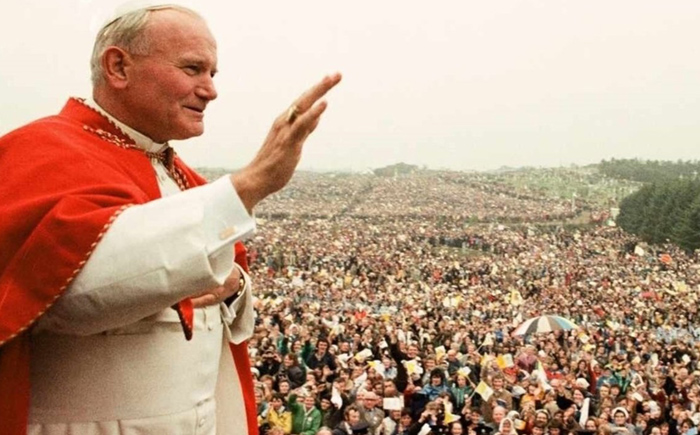
The Catholic Church hosts several major international events that draw millions of pilgrims and participants across the globe. These gatherings focus on youth, families, spiritual renewal, and religious devotion.Global Catholic events encompass an extensive calendar of liturgical celebrations, international pilgrimages, and global days of prayer. Key worldwide observances range from major liturgical seasons to specific Holy Days and global assemblies dedicated to various intentions.Established by Pope Francis, this global celebration honors the elderly and is marked with special masses and parish events.Observed globally to encourage ecological awareness and prayers for the environment.A worldwide day of prayer and support for the missionary activities of the Catholic Church. A globally coordinated day recognizing and praying for refugees and displaced people.There are Many catholic International events but only 4 are very famous.
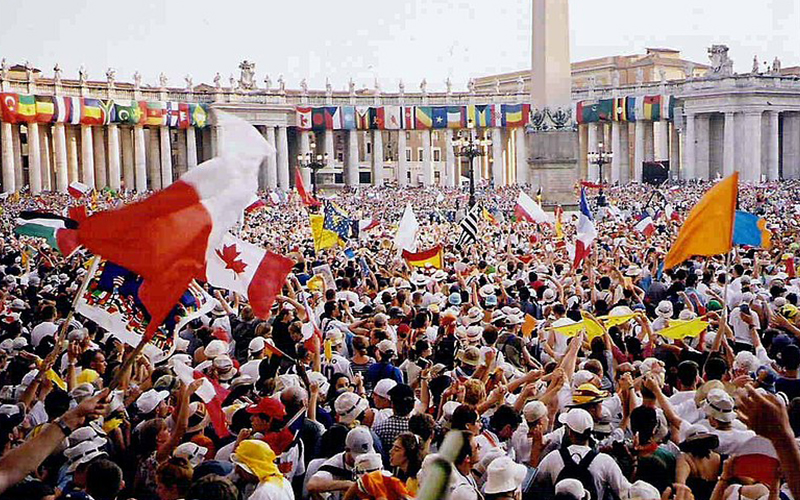
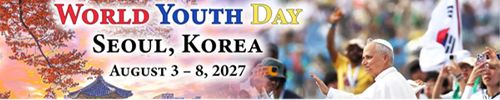
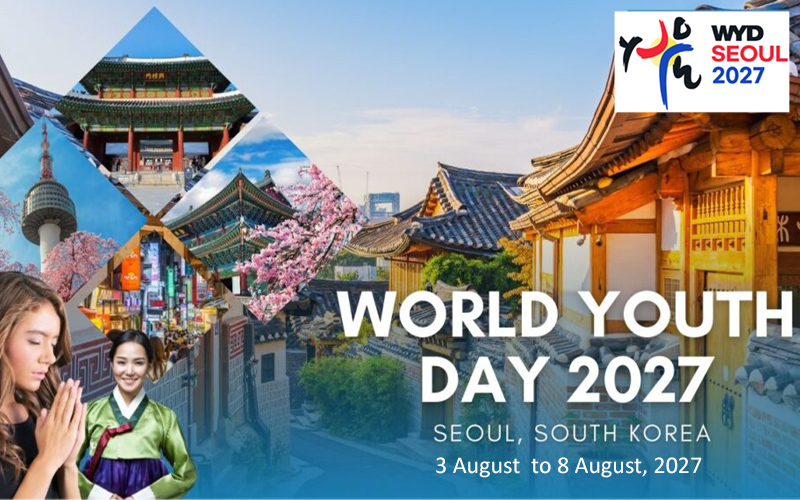
Catholic World Youth Day (WYD) is a massive, international gathering of young adults organized by the Catholic Church. Initiated by Pope John Paul II in 1985, it brings together hundreds of thousands of pilgrims for days of faith, culture, and community, culminating in a Papal Mass.The event is celebrated globally on a smaller, diocesan scale every year. However, the major international pilgrimage takes place every few years in a different host cities and Countries.Catholic World Youth Day (WYD) was initiated by Pope John Paul II in 1984 to celebrate the youth of the Catholic Church. It began as a modest Palm Sunday gathering in Rome and has since evolved into an international, week-long festival of faith that draws millions of young adults from across the globe.1984 (Rome, Italy): Pope John Paul II invited youth to Rome for an International Jubilee, expecting about 60,000 pilgrims. Over 250,000 attended, prompting the Pope to make it a recurring event. At the end of this gathering, he entrusted the youth with the World Youth Day Cross.World Youth Day (WYD) is a global gathering of young Catholics initiated by Pope John Paul II in 1985. Its primary purpose is to foster a personal encounter with Jesus Christ, celebrate the universality of the Church, and empower young adults aged 18-35 to commit their lives to Christ and spread the message of hope. To provide a transformative spiritual experience through prayer, the sacraments (Confession and the Eucharist), and listening to the Word of God.
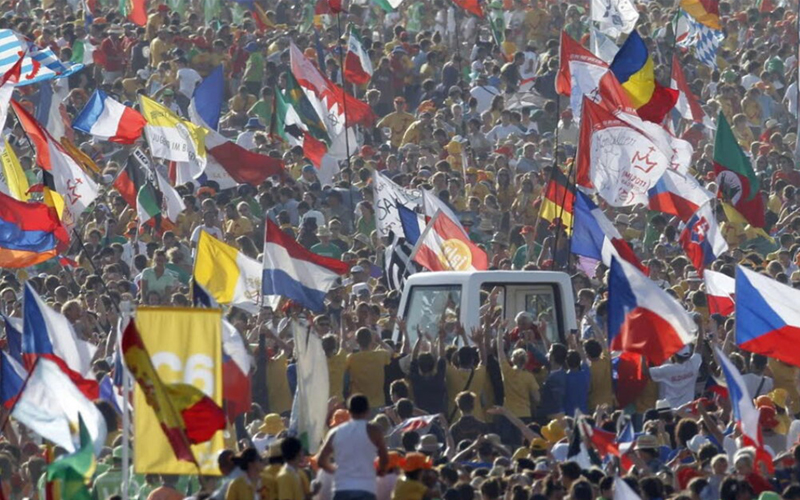
Initiated by Pope St. John Paul II in 1994, the World Meeting of Families (WMOF) is the largest global gathering of Catholic families. Organized by the Dicastery for Laity, Family and Life, the event takes place every three years, offering theological-pastoral congresses and culminating in a grand papal Mass.The WMOF has traveled across the globe, bringing together Catholics from all continents to discuss the church's vision of marriage and family life.The purpose of the Catholic World Meeting of Families (WMOF) is to celebrate, support, and strengthen the sacred bond of family life. Instituted by Pope St. John Paul II in 1994, this global event provides families with a space to gather, share experiences, deepen their faith, and recognize their crucial role in society and the Church.It emphasizes that family love is a true calling and a path to holiness, focusing on Christ-centered. The multi-day event features theological-pastoral congresses, keynote speakers, and workshops that address modern challenges in family life, marriage preparation, and pastoral care.Hosted every three years in a different international diocese under the direction of the Vatican, it unites Catholics worldwide through festivals, prayer, and a closing Eucharistic celebration attended by the Pope. It encourages parishes and dioceses globally to host local events concurrently, extending the meeting's reach and fostering a supportive, worldwide network of Catholic families.
Catholic World Eucharistic Congresses are large-scale gatherings of clergy, religious, and laity designed to publicly profess faith in the real presence of Jesus Christ in the Eucharist. These multi-day events aim to foster spiritual renewal, address societal issues through Catholic teaching, and culminate in grand processions and adoration.The International Eucharistic Congress was initiated by a devout French laywoman, Marie-Marthe-Baptistine Tamisier (1834–1910). Inspired by St. Peter Julian Eymard, she organized and led the first congress in Lille, France, on June 21, 1881, which also received the official blessing of Pope Leo XIII.The movement grew from these French origins into a major global institution to celebrate and promote devotion to the Eucharist.The purpose of a Catholic Eucharistic Congress is to gather clergy, religious, and laity to publicly bear witness to the Real Presence of Jesus in the Eucharist. These multi-day gatherings aim to deepen the faithful's understanding of the sacrament, promote Eucharistic devotion, and seek ways to live out this faith in the modern world.It serves as a powerful opportunity for communal worship, spiritual growth, and renewal of faith. Through these gatherings, attendees are encouraged to explore the profound significance of the Eucharist in their lives and in the life of the Church.
In the Catholic Church, a Jubilee Year (or Holy Year) is a special period of grace, forgiveness, and pilgrimage. Ordinary Jubilees are celebrated every 25 years, while Extraordinary Jubilees are declared by the Pope for specific milestones.The most recent cycle featured the Ordinary Jubilee of 2025, which carried the theme "Pilgrims of Hope". This massive event officially commenced on December 24, 2024, when Pope Francis opened the Holy Door at St. Peter's Basilica, and concluded on January 6, 2026.An international Catholic Jubilee, or Holy Year, is a special period of grace, forgiveness, and renewal proclaimed by the Pope, usually every 25 years. It traces its roots to biblical tradition and offers the faithful opportunities for pilgrimage, repentance, and obtaining a plenary indulgence. The term comes from the Hebrew word yobel (ram's horn), which signaled the start of a special year. As prescribed in the Book of Leviticus, it occurred every 50 years to forgive debts, free enslaved individuals, and restore ancestral lands. Jesus fulfilled this concept in the New Testament (Luke 4:18-19), proclaiming a spiritual rather than agricultural Jubilee—a time of liberation from the burden of sin. Pope Boniface VIII declared the first Catholic Jubilee, responding to massive crowds of pilgrims traveling to Rome seeking spiritual peace. Initially, he intended to celebrate it once a century. In 1343, Pope Clement VI reduced the interval to 50 years. In 1470, Pope Paul II shortened it to every 25 years to ensure that every generation could experience at least one Holy Year in their lifetime. Popes can also proclaim an Extraordinary Jubilee outside the regular 25-year cycle to highlight a specific theme or spiritual need. Recent examples include the Year of Redemption called by Pope Pius XI in 1933, the Great Jubilee of 2000 under Pope John Paul II, and the Extraordinary Jubilee of Mercy called by Pope Francis in 2015.



S-73/S-75,2nd Floor,Malikabad,
Murree Road, Rawalpindi 46000
Pakistan
+92 313 5495157
info@jmjpilgrimagespak.com
wafpakistan2023@gmail.com
World Youth Day (WYD) is a major international Catholic festival bringing together millions of young people for faith, cultural exchange, and pilgrimage with the Pope.
The World Meeting of Families (WMOF) is the world’s largest gathering of Catholic families, organized by the Vatican's Dicastery for Laity, Family and Life and held every three years.
The International Eucharistic Congress (IEC) is a major Catholic gathering held every few years to bear witness to the Real Presence of Jesus in the Eucharist.

© JMJ Pilgrimages Pakistan. All Rights Reserved. Design by MARK ENTERPRISES